Worldbuilding Journal 1

I’ve been working on a fantasy setting that has strong Norse and Heptarchy influences. Maybe working in the summer heat has me longing for cold ocean spray. I have a few locations that I came up with over the last couple months and they are all cohesive with the setting. They fit together better in my mind; when they were just floating around without the concerns of physical relation to each other.
I started a map last week and it proved more difficult than I anticipated. This is my first time making a sea-focused world with a large expanse of ocean on the map. With a terrestrial map, I put down locations and the resources those locations have. I connect them will roads and place terrain that inhibits or blocks travel. Oceans are wide open and I find it difficult to think about time and space between locations.
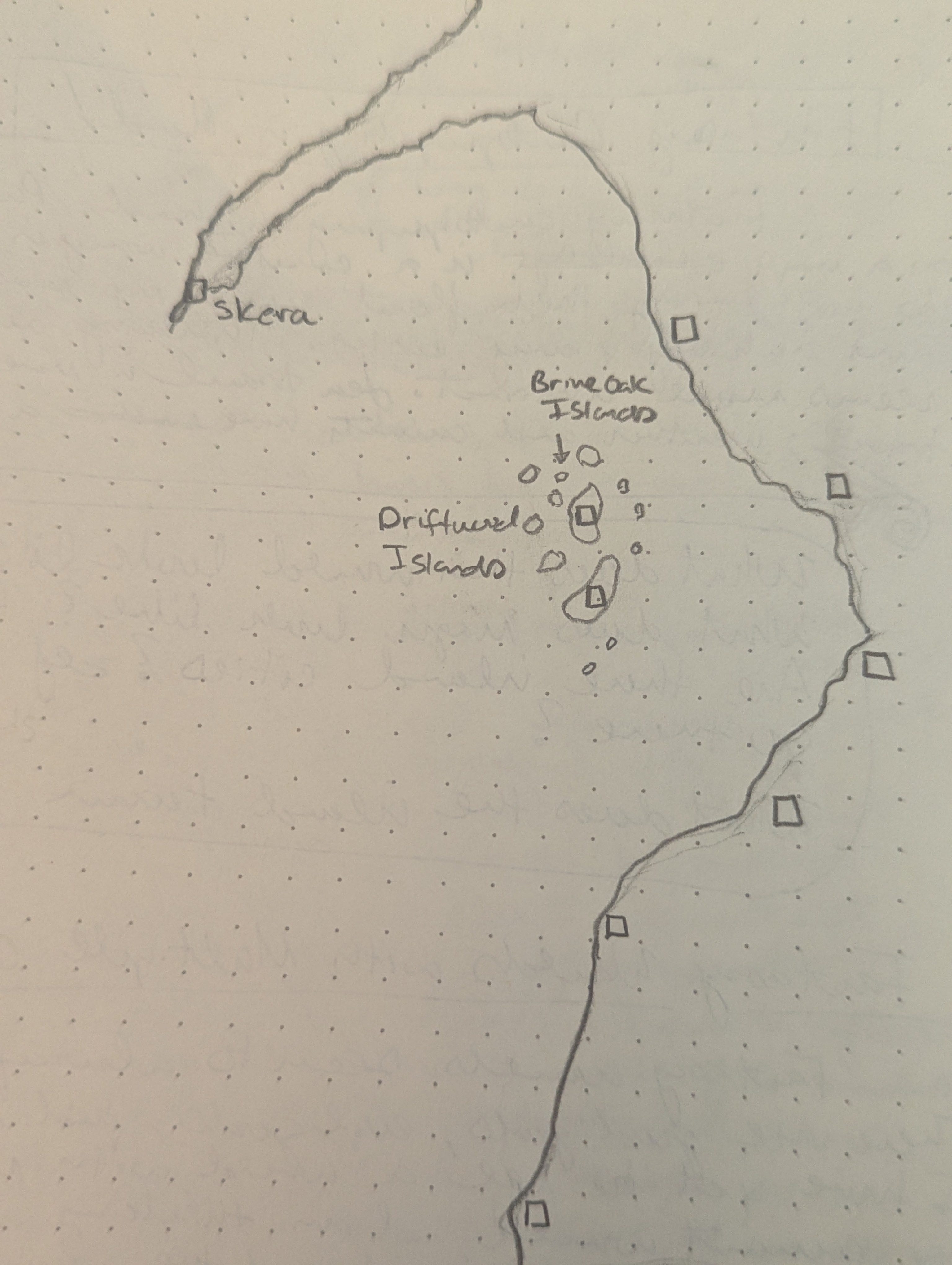
I am leaning towards just leaving most of the ocean section of map open; exact locations can be mysterious, cities lost, and ruins forgotten about. This would allow a legacy style of play. The map starts mostly empty and can be filled in with random tables, or the game master’s ideas, as hexes are traversed. I think mapping out currents and trade winds will help me get a better idea of where known locations should go. Communities without favorable winds and currents wouldn’t grow as quickly as those with these features.
I have come up with two cultural elements for this world.
Seazerkers
It is told in myth that the first seazerkers were driven to madness by thirst and hunger; adrift at sea with no wind and too exhausted to row. They eventually drifted into an island settlement, falling upon the residents in a frenzy. First, they sated themselves on blood and then water.
Modern seazerkers eat a bioluminescent algae that grows on the bottom of ship’s hulls. They also paint their faces with it; presenting a terrifying visage coming out of the night. The algae takes some time to grow and must be in the presence of nutrients brought to the surface by deep sea currents. Seazerkers are only present on long voyages.
Northern Sea Chanters
Sea Chanters carry a long, large drumstick that doubles as a two-handed mace. They use it in the ritual of calling to the deep. The bronze-tipped drumstick is used to beat a variety of hide and copper drums. The priest, or priests, chant along with the rhythm. The song lasts, on average, twenty minutes but can go on for hours with a dozen or more priests. The bet and chant are not set but are a reflection of the sea and weather.
The sea chanters have long hair and beards, often matted from sea spray. They wear robes in shades of gray and sea green. Sea chanters wear thin silver chain belts hung with coins found on beaches or in battles. Beads and shells adorn the hair of many priests.
Any large sea voyage will include a sea chanter on board. They have deep knowledge of navigation and can read the skies and waves. Only the smallest of coastal villages won’t have a priest of the sea. They are looked to for storm forecasts, the movement of schools of fishes, and celestial events.
I have also been thinking a lot about space and distances between locations across the ocean. Just make the map bigger and worry about scale less I think 😂